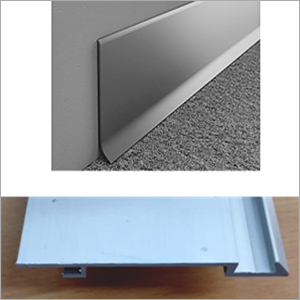
About Aluminium Skirting Profiles 50mm,75mm,100mm,150mm
Aluminium Skirting Profiles
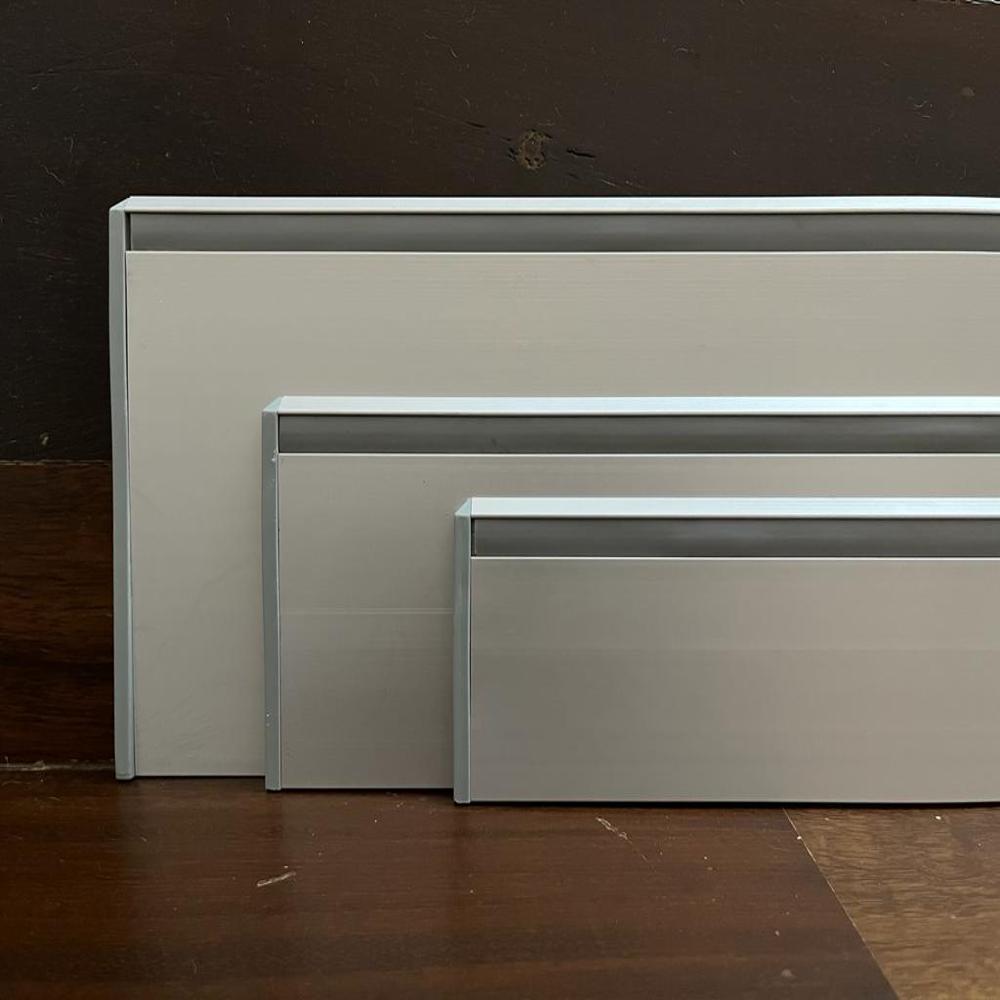
Available Sizes:
- Sec No. 741, 50mm Aluminium Skirting Profiles,
- Sec No. 577, 75mm Aluminium Skirting Profiles,
- Sec No. 607, 100mm Aluminium Skirting Profiles,
- Sec No. 687, 150mm Aluminium Skirting Profiles,
High-Strength and Lasting DesignThese aluminium skirting profiles are made from premium 6063 aluminium alloy in a T6 temper, ensuring remarkable structural strength and longevity. The anodized finish further enhances their ability to withstand wear and corrosion, making this product highly suitable for both interior and exterior applications.
Versatile Size and Profile OptionsOffered in 50mm, 75mm, 100mm, and 150mm heights, each profile has an angle shape that seamlessly fits wall and floor junctions. The selection allows you to choose the most appropriate size for your project, blending well with various dcor styles.
FAQs of Aluminium Skirting Profiles 50mm,75mm,100mm,150mm:
Q: How are aluminium skirting profiles typically installed?
A: Aluminium skirting profiles are usually fixed to walls using suitable fasteners or adhesives, depending on the surface. Their angle shape allows for straightforward alignment at the junction of walls and floors, simplifying the installation process.
Q: What are the benefits of using anodized aluminium skirting profiles?
A: Anodized aluminium skirting profiles offer enhanced corrosion and scratch resistance. The anodized surface also ensures a uniform silver finish and requires low maintenance, making them an excellent choice for demanding environments.
Q: When should I consider using high-strength skirting profiles?
A: High-strength skirting profiles are particularly advantageous in high-traffic areas or commercial installations where durability and protection for wall edges are crucial, preventing damage from daily wear and cleaning equipment.
Q: Where can I source these aluminium skirting profiles in India?
A: You can source these profiles directly from reliable distributors, exporters, importers, manufacturers, suppliers, and traders located throughout India. Many provide customization and bulk order options to suit different project needs.
Q: What is the typical process for manufacturing aluminium skirting profiles?
A: The manufacturing process usually involves extruding Grade 6063 aluminium into the specified angle shape, applying a T6 tempering treatment for added strength, and finishing with an anodizing process to enhance surface durability and appearance.
Q: How can these skirting profiles be used in interior projects?
A: They are ideal for creating clean, protected transitions between floors and walls, concealing unsightly gaps, and adding a modern metallic touch to interiors in offices, homes, hospitality settings, and retail spaces.







 Send Inquiry


 Send Inquiry


